
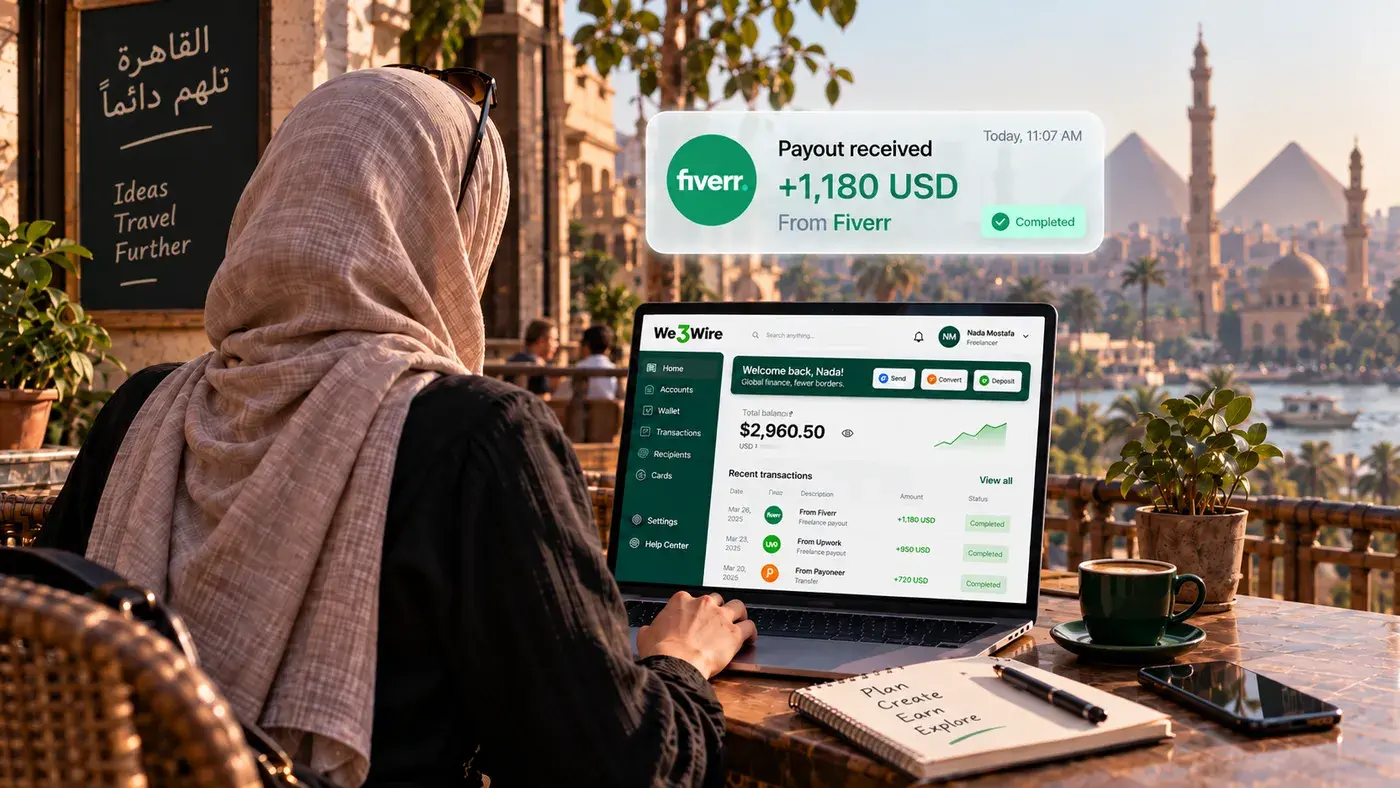
A creator can earn from platform revenue, a sponsor, affiliate links and client work in the same month. The income streams look different, but the money problem is the same: how do you receive global earnings without losing track of currency and conversion?
The useful question is not only whether the money landed. It is what currency landed, what it cost to get there and whether you still have a choice about what happens next.
Understand the payout
Upwork and Fiverr both support freelancer payouts, but their withdrawal routes and fees differ. Other platforms such as Khamsat or Mostaql may suit different kinds of work. Availability can change, so check the platform itself before choosing a payout route.
For Egyptian freelancers, a payout is better understood as a flow: client or marketplace → payout rail → receiving balance → conversion or withdrawal. Every extra forced conversion deserves scrutiny.
Choose the right flow
If you need local currency immediately, converting can be the right choice. But if you still pay for international software, contractors, advertising or online services, converting everything straight away may reduce flexibility.
We3Wire is built around eligible global payments, wallets, transfers, conversion, supported stablecoins and card spending. The goal is not to force one route; it is to make the next step clearer.
USDT and conversion
USDT is a dollar-denominated digital token, not a bank deposit. It is designed to track the value of the US dollar and carries issuer, custody, network and regulatory risks that are different from holding money in a bank.
For eligible flows, the practical use case is optionality: keep value stablecoin-denominated when you do not need local currency yet, convert when you do, withdraw on-chain, or spend internationally with your We3Wire card.
Keep your options open
International earners usually have mixed needs. Part of the money may be for life in Egypt; another part may still be connected to global business expenses. A flexible setup lets those decisions happen separately.
The point is control, not complexity. Tamam — when the payout lands, you should know what landed and what you can do next.
Frequently asked questions
How can freelancers in Egypt receive international payments?+
Through supported freelance platforms, direct client payments and other eligible international payment routes. Availability depends on the provider, country and account.
Is USDT the same as holding US dollars in a bank?+
No. USDT is a digital token designed to track the US dollar. It is not a bank deposit and carries different risks.
Do I need to convert every payout immediately?+
No. The right choice depends on what currency you need, your upcoming expenses, fees and the options available to your account.
Can I withdraw on-chain or spend with my We3Wire card?+
Yes. You can withdraw supported stablecoins on-chain where the relevant network is available, and you can also use your We3Wire card for international spending. Network fees can apply to on-chain withdrawals.
Your work is global. Your money should stay flexible.
Receive eligible global payouts, keep supported balances, convert when you need to, withdraw on-chain, or spend internationally with your We3Wire card.
Explore We3Wire